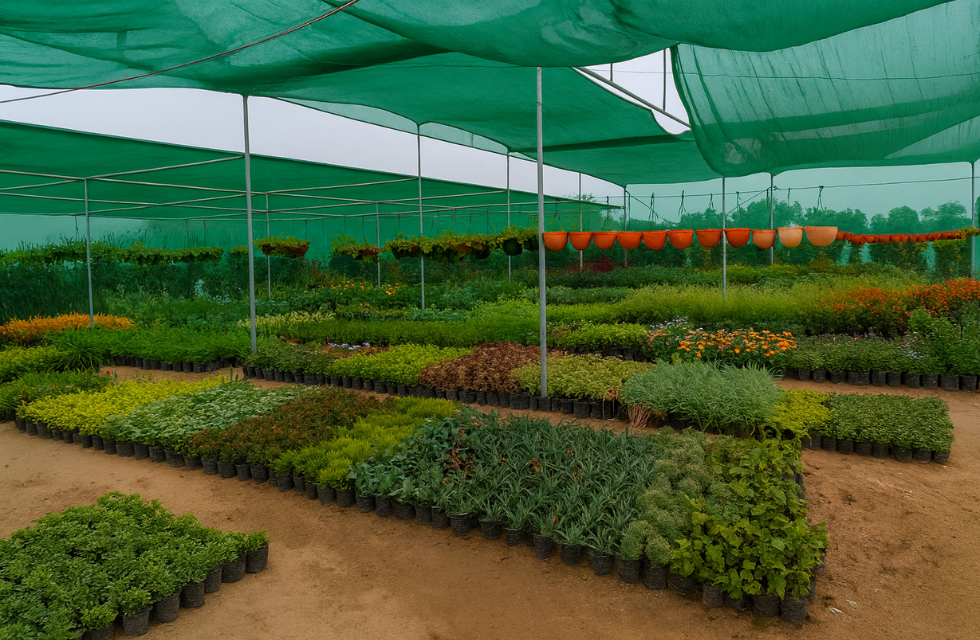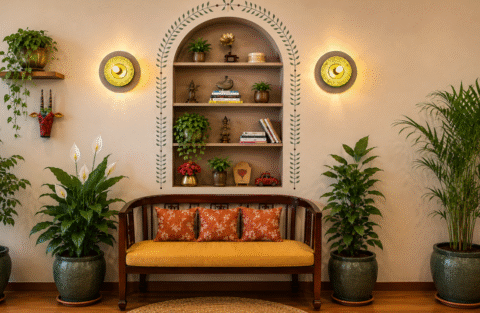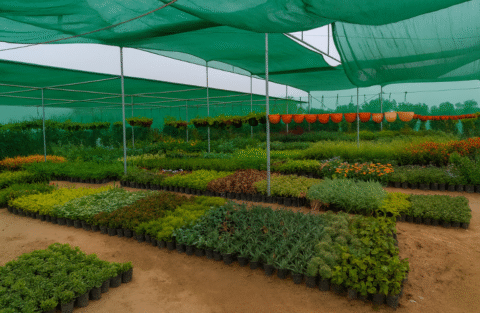


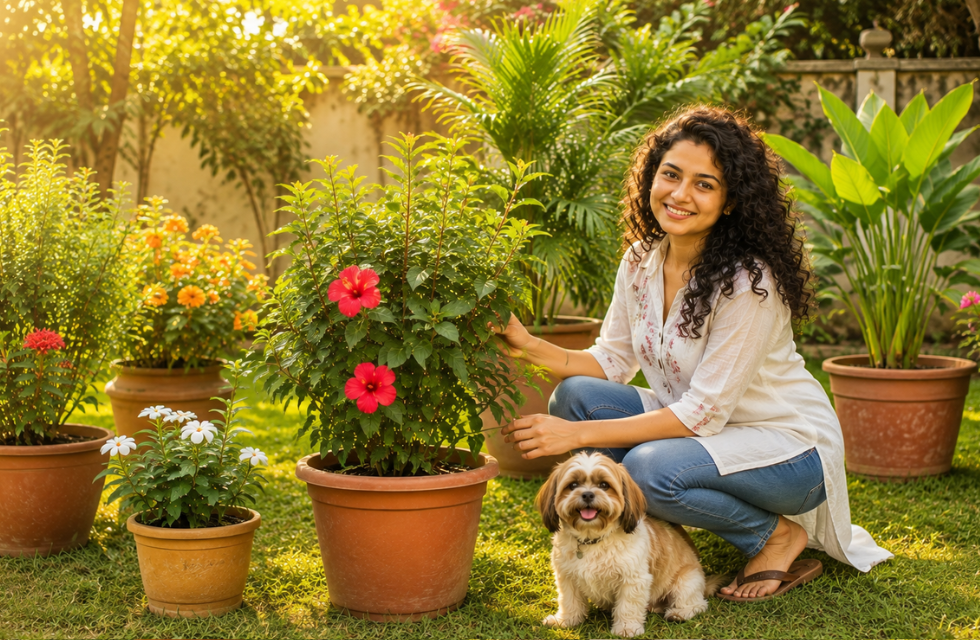
The fourteen most dependable outdoor picks for an Indian home garden are Bougainvillea, Hibiscus, Ixora (Rangan), Arabian Jasmine (Mogra), Champa (Plumeria), Aparajita, Parijat, Rain Lily, Allamanda, Tulsi, Curry Leaf, Lemon, Aloe Vera and Marvel of Peru (Sondhyamalati).
Between them you get colour, fragrance, kitchen herbs and near year-round bloom — and every one of them grows happily in a pot on a terrace, balcony or front yard.
Search for a garden list and you will find hundreds of names. What you rarely find is the information that decides whether the plant survives your particular home: how much direct sun it truly needs, when it flowers, how fast it outgrows a 10-inch pot, whether it is safe around a curious dog, and what it looks like in July when the monsoon has been relentless for three weeks.
This guide fills that gap. Treat it as a working list of plants for home garden with name in India that you can verify at any nursery counter: every species below is given with its botanical identity, sunlight requirement, realistic bloom window and the one care detail that most often goes wrong.
It is written for Indian conditions specifically — for terracotta pots on a Kolkata rooftop, a west-facing Pune balcony, a Chennai courtyard, a Delhi kitchen garden — and not adapted from temperate advice that assumes a frost season and a lawn.
One quick note on scale: home gardening in India is no longer niche. According to the Ministry of Agriculture and Farmers Welfare, the area under floriculture rose from 0.317 million hectares in 2023–24 to 0.397 million hectares in 2024–25 — an increase of 25.24 percent — with flower production reaching 4.27 million tonnes (PIB, March 2026). Demand for saplings, planters and potting mix has followed the same curve. You are joining a very large club.

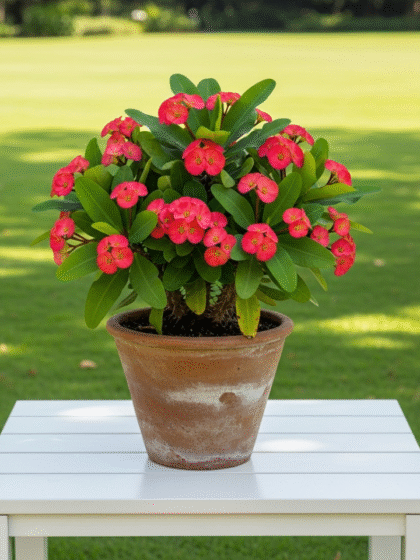
Euphorbia Plant
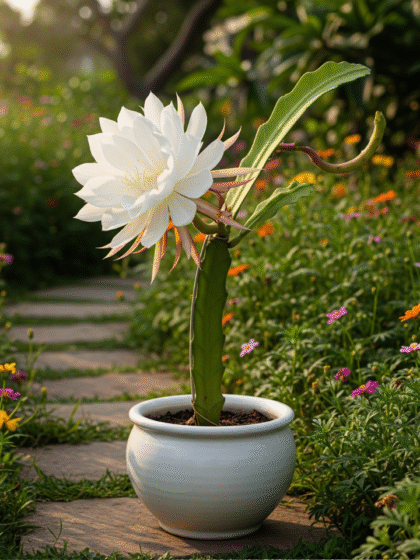
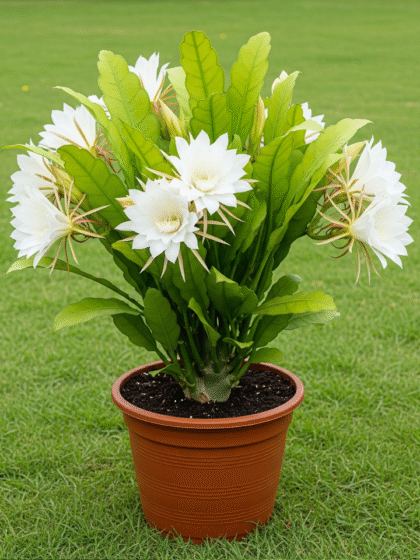
Bhrahma kamal plant
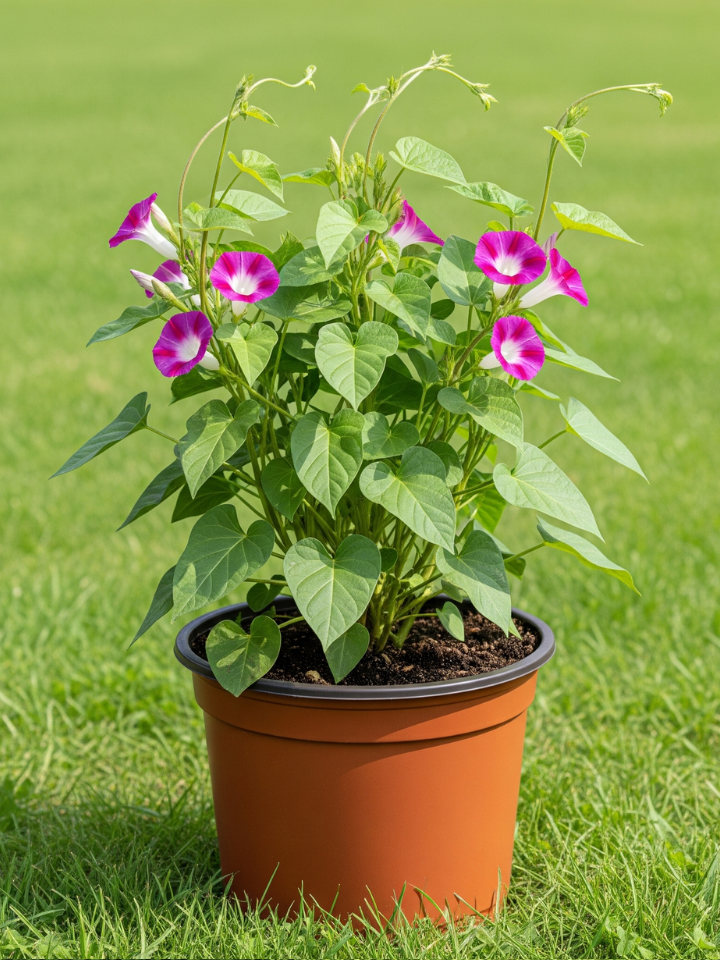

Morning Glory Plant

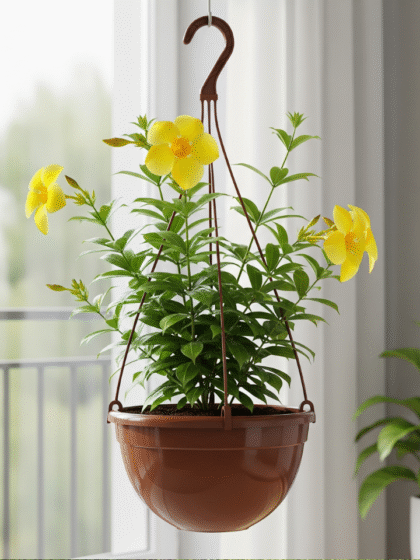
Allamanda Plant
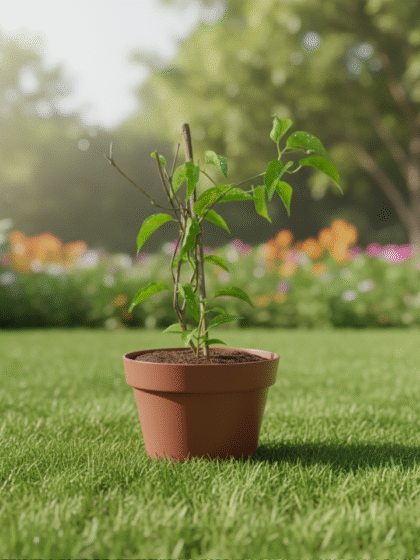

Sankrant Vel Plant

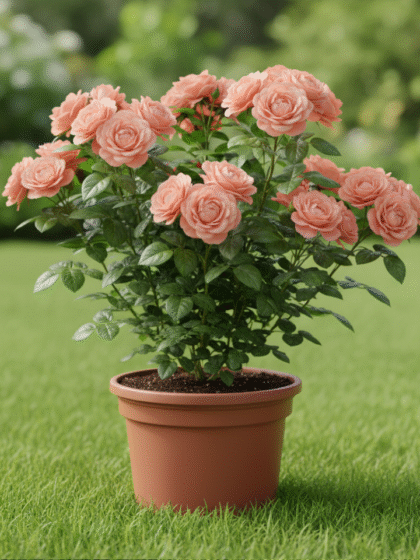
Climbing Rose Plant


Parijat


Rain Lily
Before the Names: Four Decisions That Decide Everything
1. Measure your light honestly
Stand in the spot at 9 a.m., 12 noon and 4 p.m. and count the hours of unobstructed sunshine. Then classify it:
- Full sun — five hours or more of direct light. This is where flowering shrubs, fruit saplings and succulents belong.
- Partial sun — roughly three to five hours, or bright light filtered through a grill or shade net. Ixora, Aparajita, Tulsi and most herbs are content here.
- Bright shade — no direct beam but open sky overhead. Ferns, Peace Lily, Aglaonema and Syngonium thrive; almost nothing flowers reliably.
A north-facing Indian balcony is usually bright shade. A west-facing one is full sun with brutal afternoon heat — excellent for Bougainvillea and Adenium, punishing for a fern.
2. Know your climate zone, not just your city
India spans several growing regimes, and the same species behaves differently across them:
- Humid coastal (Mumbai, Chennai, Mangalore, Kochi): salt-tolerant, humidity-loving species do best — Champa, Mogra, Ixora, Bougainvillea, Areca Palm.
- Humid subtropical east and north (Kolkata, Howrah, Patna, Lucknow): a genuine four-season garden. Winter is the reward season here; roses, chrysanthemum, petunia and dianthus perform beautifully from November to February.
- Semi-arid west and interior (Pune, Nagpur, Ahmedabad, Solapur): hot, dry summers demand drought-tolerant choices — Adenium, Portulaca, Euphorbia, Bougainvillea, Aloe.
- Deccan plateau (Hyderabad, Warangal, Bengaluru): mild nights and long dry spells suit succulents, Ixora, Allamanda and most flowering shrubs.
If you are unsure about your local rainfall and temperature pattern, the India Meteorological Department publishes district-level normals worth a glance before you plan a season.
3. Choose the container before the species
A healthy sapling in the wrong pot is a slow disappointment. Terracotta breathes and suits succulents, cactus and most flowering shrubs. Glazed ceramic looks superb indoors but holds water, so pair it with a very open potting mix. Plastic is light and practical for hanging arrangements and for rotating seasonal colour. Whatever you pick, drainage holes are non-negotiable — root rot from a blocked base kills more urban greenery than any insect.
4. Be realistic about watering time
If you travel often or leave home at eight and return at nine, build the garden around species that forgive a missed week. That single constraint eliminates half the temptations at a nursery and leaves you with a collection that actually looks good in month six.
14 Outdoor Plants Name List for an Indian Home Garden
This is the core list — fourteen species that between them cover colour, scent, shade, fruit and ritual use, and all of which are sold as established saplings rather than seed. These are the best plants for home garden with name and botanical identity spelled out, because regional common names overlap confusingly and the wrong label at a nursery counter costs you a season.
1. Bougainvillea (Bougainvillea glabra / spectabilis)
Full sun, blooms in heavy flushes from February to May and again after the monsoon. The papery colour comes from bracts, not petals, which is why it lasts for weeks. The counter-intuitive rule: it flowers best when slightly starved and slightly thirsty. Overwatering produces a green wall and no colour.
2. Hibiscus (Hibiscus rosa-sinensis)
Full sun, flowers nearly all year in warm zones and pauses only in a sharp north Indian winter. Feed it a potassium-rich fertiliser every fortnight and deadhead spent blooms. In Bengal it is inseparable from Kali puja; across the country it is the most forgiving flowering shrub a beginner can own.
3. Ixora / Rangan (Ixora coccinea)
Partial to full sun. Compact, evergreen, and topped almost continuously with dense clusters of red, orange, pink or yellow. It prefers slightly acidic soil — if the leaves yellow between the veins, that is usually alkalinity, not underfeeding.
4. Arabian Jasmine / Mogra, Beli (Jasminum sambac)
Full sun, fragrant white flowers from March through September, peaking in the monsoon. Prune hard after each flush; the buds form on new wood, so the plant you never cut is the plant that stops blooming.
5. Champa / Frangipani (Plumeria rubra)
Full sun, blooms April to October, drops its leaves in winter and looks briefly dead — this is normal dormancy, not disease. Extremely drought-hardy once established and salt-tolerant, which makes it a coastal favourite.
6. Aparajita / Butterfly Pea (Clitoria ternatea)
A fast climber for partial to full sun, flowering from June to November. The deep blue flowers are used for herbal tea and natural food colouring. Give it a grill, trellis or railing and it will cover it in a single season.
7. Parijat / Shiuli, Night Jasmine (Nyctanthes arbor-tristis)
Partial to full sun. Fragrant white-and-orange flowers open at night and carpet the ground by dawn, mainly from August to November — the smell of autumn across eastern India. Slow to start, then dependable for decades.
8. Rain Lily (Zephyranthes species)
Partial to full sun. A bulb that flowers within days of the first heavy rain, then repeats through the monsoon. Almost impossible to kill, multiplies on its own, and ideal for pot edges and borders.
9. Allamanda (Allamanda cathartica)
Full sun, bright yellow trumpets from March to November. Grows as a shrub or a loose climber. The sap is an irritant, so keep it away from small children and place it where casual hands do not brush past.
10. Tulsi / Holy Basil (Ocimum tenuiflorum)
Four to six hours of sun, ideally on a raised spot near the entrance or northeast corner. Pinch the flowering spikes to keep the leaf growth soft and the plant alive longer. Rama and Krishna (Shyama) types differ in leaf colour and pungency, not in care.
11. Curry Leaf (Murraya koenigii)
Full to partial sun. Slow for the first year, then generous for a decade. Harvest whole sprigs rather than individual leaves — that is what triggers branching. Keep it slightly dry in winter and it sails through.
12. Lemon (Citrus limon)
Full sun and a genuinely large container, at least 14 to 18 inches. Citrus is a heavy feeder; a monthly dose of compost plus micronutrients prevents the yellow, veined leaves that discourage most first-time growers.
13. Aloe Vera (Aloe barbadensis miller)
Bright light, gritty mix, and water only when the soil is dry to a knuckle’s depth. It survives neglect, propagates itself through pups, and earns its place in a kitchen corner.
14. Marvel of Peru / Sondhyamalati (Mirabilis jalapa)
Full sun. Flowers open in late afternoon and stay fragrant all evening, from June to October. It self-seeds enthusiastically — charming in a garden bed, worth controlling in a small terrace collection.
All fourteen are available as healthy, well-rooted saplings in the Best outdoor plants for home garden range, packed for transit and dispatched with a care card.
Best Flower Plants for Home Garden in India, Season by Season
A garden that peaks once a year is a missed opportunity. The Indian calendar gives you three distinct flowering windows, and planning across all three is what separates a pleasant balcony from a memorable one. What follows are flower plants for home garden with name and bloom window attached, so you can build a rotation rather than a single showy month.
Summer performers (March to June)
Heat is not the enemy — the wrong species is. These handle 38°C and above without sulking:
- Marigold (Tagetes erecta) — continuous bloom, useful as a pest-deterrent border.
- Zinnia and Portulaca — fast, cheerful, and happy in shallow pots and railing planters.
- Vinca / Nayantara (Catharanthus roseus) — flowers through the hottest weeks with almost no attention.
- Adenium (Desert Rose) — sculptural caudex, dramatic blooms, thrives on neglect.
- Kunda and Mogra — the fragrance pair that makes a summer evening on the terrace worth it.
The seasonal summer flowering collection groups these together if you want a ready-made colour block.
Monsoon performers (July to September)
Rain does the watering; your job becomes drainage. Elevate pots on bricks or feet so they never sit in a saucer of standing water.
- Rain Lily (Zephyranthes) — blooms in response to rainfall itself.
- Balsam (Impatiens balsamina) — the classic dolonchapa of Indian courtyards.
- Torenia — excellent in partial shade where summer species struggle.
- Arabian Jasmine — reaches its fragrance peak in humid air.
- Hibiscus — keeps flowering right through, provided the roots drain.
Browse the monsoon flowering range for rain-season colour that will not rot.
Winter performers (November to February)
For the northern and eastern plains, this is the best gardening season of the year. Cool nights and clear light produce blooms that summer simply cannot match.
- Chrysanthemum — the definitive Indian winter flower, in every shade from bronze to white.
- Petunia and Dianthus — dense, long-lasting colour in window boxes and railing planters.
- Rose — prune in October and the December flush will be the best of the year.
- Poinsettia — red bracts colour up as the nights lengthen; keep it away from streetlight glare.
- Calendula and Pansy — reliable in Delhi, Kolkata, Lucknow and the hill stations.
A well-planned Best flower plants for home garden selection usually mixes one anchor shrub, one fragrance plant and two seasonal fillers rotated three times a year.
365 Days Flowering Plants in India: An Honest List
Let us be precise about a phrase that gets used loosely. No plant produces flowers on all 365 days without a break. What experienced gardeners mean by the term is a species that blooms across eight to eleven months in a warm Indian climate, with only a short rest, and that recovers quickly after pruning.
By that honest standard, these are the genuine year-round workhorses:
- Hibiscus — the closest thing to a true perpetual bloomer in tropical and subtropical India.
- Vinca / Sadabahar — the Hindi name literally means ‘always in season’, and it earns it.
- Ixora — clusters through most of the year in the south and along the coast.
- Bougainvillea — not continuous, but three heavy flushes a year with a dry rest between them.
- Rose — with disciplined pruning every eight to ten weeks, it flowers repeatedly outside the peak monsoon.
- Allamanda and Kunda — long overlapping bloom windows that cover the gaps left by the others.
The practical technique matters more than the species list. Three habits produce continuous colour: deadhead spent blooms weekly so the plant does not divert energy into seed; feed a bloom-boosting fertiliser every fortnight during active growth; and stagger your plantings so that something is always coming into bud while something else is finishing.
If you want the effect without the planning, the All season Flower Plant in India collection is curated around exactly this principle — overlapping bloom cycles rather than a single spectacular month.
Low Maintenance Plants for Home Garden with Name
Low maintenance does not mean no maintenance. It means the plant tolerates irregular watering, adapts to a range of light, resists common pests, and does not collapse if you leave town for ten days. These are the species that fit that definition in Indian conditions:
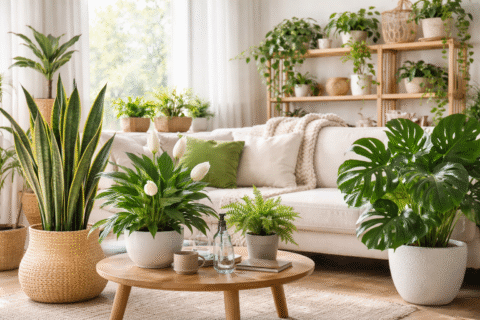
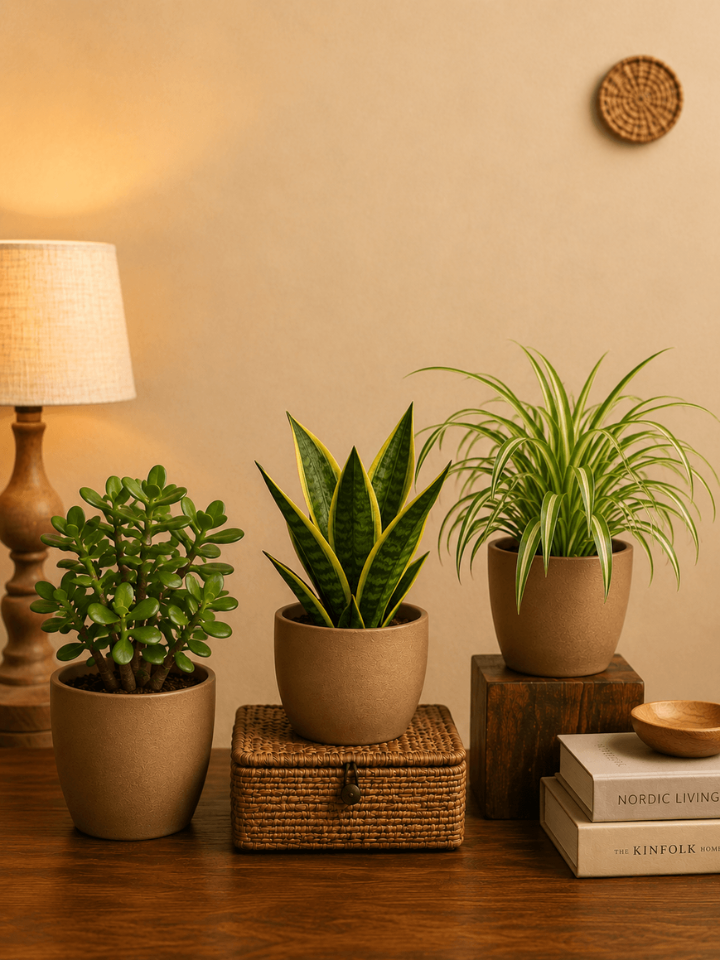
- Snake Plant (Sansevieria trifasciata) — survives deep shade and fortnightly watering; equally happy on a shaded balcony or indoors.
- Jade Plant (Crassula ovata) — a succulent that needs bright light and very little water; lives for decades.
- Money Plant (Epipremnum aureum) — grows in soil or a water bottle, and roots from any cutting.
- Spider Plant (Chlorophytum comosum) — produces its own baby plantlets and tolerates most abuse.
- Aloe Vera — the definition of self-sufficient once its drainage is right.
- Bougainvillea — the rare flowering shrub that actually prefers being left alone.
- Adenium — stores water in its swollen base and shrugs off a missed week.
- Portulaca — flowers in shallow pots and full sun with almost no soil depth.
- Tulsi and Curry Leaf — useful, hardy, and content with a weekly soak.
- Haworthia and Christmas Cactus — compact succulents for windowsills and shelf corners.
The full Low maintenance plants catalogue runs to more than sixty varieties, which is worth browsing if your constraint is time rather than space. For a rooftop specifically, Low maintenance plants for terrace garden narrows it to species that also handle direct heat and wind exposure.
Best Plants for Home Garden Vastu: What the Tradition Actually Says
Vastu-linked gardening is one of the most searched and least carefully written topics in Indian horticulture, so it is worth separating the layers.
Rooted in classical Indian texts
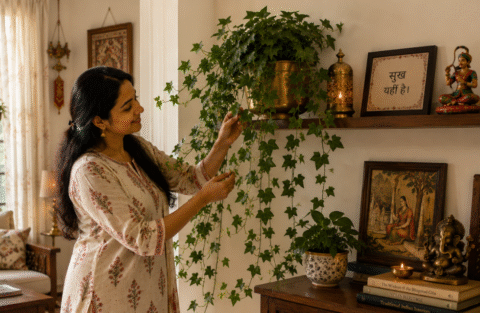
Tulsi, Bel (Aegle marmelos), Banana, Neem, Ashoka and Peepal carry genuinely old scriptural and Ayurvedic associations. Tulsi in particular has a long-standing placement convention in the northeast or in front of the house, on a raised platform, and its ritual status in Indian households predates any modern interior-design framework.
Modern and Feng Shui-influenced additions
Money Plant, Lucky Bamboo, Jade and Areca Palm are frequently presented as Vastu plants. Their auspicious associations largely come from Chinese Feng Shui and from twentieth-century popular writing, not from classical Vastu Shastra. That does not make them a bad choice — they are excellent, forgiving plants — but it is honest to say where the belief originates.
The placement conventions most commonly cited
- Tulsi: northeast, or directly in front of the entrance on a raised base.
- Money Plant and Lucky Bamboo: southeast, associated with prosperity in popular practice.
- Bamboo and tall foliage: east or southeast, kept trimmed and healthy.
- Thorny and dried plants: traditionally discouraged near the main entrance, with cactus the usual example.
The one rule every school agrees on is practical rather than mystical: a dying, dusty or waterlogged plant helps nobody. Healthy greenery lifts a space; neglected greenery does the opposite.
If you want the auspicious grouping without researching each species, the Vastu plants collection assembles the commonly recommended set, and a three-plant combo covers most entrance and living-room placements.
Fruit, Herb and Medicinal Plants Worth a Corner
A home garden that also feeds you is a different kind of pleasure. These grow in containers on a normal Indian terrace or balcony, without a farm plot:
- Lemon, Guava, Amla and Pomegranate — dwarf and grafted varieties fruit in large pots within two to three years.
- Papaya and Dragon Fruit — fast growers for a sunny rooftop with room overhead.
- Mint, Curry Leaf, Bay Leaf, Celery and Rosemary — the kitchen quartet plus two, all happy in partial sun.
- Ashwagandha, Brahmi (Bacopa), Thankuni (Centella), Kalmegh and Bhringraj — traditional Ayurvedic species that grow easily in Indian soil and climate.
- Turmeric and Ginger — planted in March, harvested after the leaves yellow in winter; a wide, shallow container is all they need.
The fruit and spice plants and medicinal and aromatic range cover both categories with saplings already established past the fragile seedling stage.
Pet Safety: The Section Most Garden Lists Skip
If a cat or dog shares your home, this matters more than aesthetics, and a great deal of published Indian garden content gets it wrong. Several of the most popular houseplants in the country are toxic if chewed.
Commonly toxic to cats and dogs: Peace Lily, Monstera, Money Plant (Pothos), Syngonium, Aglaonema, Anthurium, Jade Plant, Kalanchoe, English Ivy, Bird of Paradise, Oleander and Sago Palm. Oleander and Sago Palm are seriously dangerous, not merely irritating.
Generally listed as non-toxic: Areca Palm, Bamboo Palm, Spider Plant, Boston Fern, Christmas Cactus, Peperomia, Haworthia, Basil and Rose.
Before you buy anything for a home with pets, check the species against the ASPCA toxic and non-toxic plant database, which is the reference clinical veterinarians actually use. A curated pet-friendly plants selection is a safer starting point than a general list.
What Home Garden Plants Can and Cannot Do for Your Air
Because this claim appears on almost every plant listing in India, it deserves a straight answer.
The famous 1989 NASA Clean Air Study did show that potted plants absorb volatile organic compounds — inside sealed laboratory chambers. A 2019 review published in Nature’s Journal of Exposure Science & Environmental Epidemiology re-analysed twelve such studies and found that ordinary ventilation removes indoor pollutants far faster than plants can. To match the effect of simply opening a window, you would need somewhere between ten and a thousand plants per square metre of floor space.
So the honest position is this: a home garden will not replace an air purifier or cross-ventilation. What it demonstrably does is add humidity in dry months, cool a terrace surface by shading it, cut glare, and improve how a space feels to live in.
And the wellbeing benefit is not folklore. A systematic review and meta-analysis in Frontiers in Psychology found consistent, statistically significant reductions in psychological stress measures among people engaged in horticultural activity. Twenty unhurried minutes with a watering can does something measurable. That is a good enough reason on its own.
Matching Names to Your Actual Space
A small balcony (20 to 40 square feet)
Go vertical and go compact. Three tiers of railing planters plus two hanging baskets will hold more greenery than four large floor pots, and they leave you room to stand. Reliable choices: Portulaca and Vinca on the railing, Mogra or Kunda for evening fragrance, Money Plant or Spider Plant trailing from above, and one anchor — a Snake Plant or a small Adenium — on the floor.
See the Best plants for home balcony in India selection for species already screened for compact growth and container life.
A terrace or rooftop
Here the enemies are heat radiating off the slab and wind. Raise every pot on feet or bricks, group containers so they shade each other’s soil, and put the tallest screening plants on the windward edge. Bougainvillea, Hibiscus, Champa, Curry Leaf, Lemon and Adenium are the backbone; Aparajita or Madhumalati on the parapet gives you a green screen within one season.
A front yard or ground-level garden
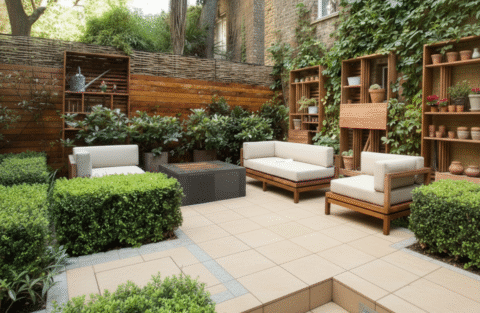
This is where you can plant directly into soil and let a species reach its full form. Parijat, Champa, Ixora and Tulsi near the entrance; Jasmine and Rangan as a flowering hedge; a Lemon or Guava in the sunniest corner; and Rain Lily along the path edge, which will surprise you every monsoon.
Climbing species for grills, arches and boundary walls are grouped in the climber plants category, and trailing varieties for hanging arrangements in hanging plants.
A Simple Year-Round Care Calendar for Indian Home Gardens
- February to March: the main planting window. Repot anything root-bound, prune Bougainvillea and Hibiscus, and sow summer annuals. This is the single most productive month of the gardening year.
- April to June: survival mode. Water early morning or after sunset, mulch pots with dry leaves or coco husk to slow evaporation, and shift delicate species out of the harshest afternoon sun.
- July to September: growth season, and drainage season. Stop routine watering, check that no pot is standing in water, and watch for fungal leaf spots. Feed lightly — rain leaches nutrients quickly.
- October to November: prune roses and flowering shrubs, refresh the top two inches of potting mix with compost, and plant winter annuals so they establish before the cold sets in.
- December to January: peak bloom in the north and east. Reduce watering, protect succulents from cold damp, and give everything as much winter sun as you can.
Five Mistakes That Kill More Home Garden Plants Than Pests Do
- By a wide margin the leading cause of death in Indian container gardens. Push a finger two inches into the soil; if it comes out damp, wait.
- Pots without working drainage. A decorative pot with no hole is a slow drowning. Use it as an outer sleeve with a plain nursery pot inside.
- Repotting immediately on arrival. A plant that has just travelled needs seven to ten days in a shaded spot to recover before its roots are disturbed.
- Feeding a stressed plant. Fertiliser is for a plant in active growth. Applied to a wilting or newly shifted one, it burns the roots.
- Never pruning. Mogra, Hibiscus, Rose and Ixora all flower on new growth. The plant you are afraid to cut is the plant that quietly stops blooming.
Frequently Asked Questions
Start with five: Hibiscus for colour, Tulsi for utility and tradition, Aloe Vera for resilience, Money Plant for a shaded corner, and Bougainvillea if you have full sun. All five tolerate mistakes, and success with them builds the confidence to try harder species.
Hibiscus, in tropical and subtropical zones. With fortnightly feeding and regular deadheading it flowers across ten to eleven months, pausing only during a sharp cold spell in the far north.
Yes. Flowering shrubs, herbs, succulents and even dwarf fruit varieties do well in containers. The requirements are adequate pot size, an open free-draining mix, and slightly more frequent feeding than ground-planted specimens, since nutrients wash out faster.
Snake Plant, Peace Lily, Aglaonema, Syngonium, Boston Fern, Lucky Bamboo and ZZ Plant all tolerate low light. Expect foliage rather than flowers — sustained blooming genuinely requires several hours of direct sun.
February to March is ideal, with a second window in September and October after the monsoon retreats. Both give new roots time to establish before the next weather extreme.
Seven to nine, arranged at three different heights. Layering matters more than quantity — nine plants at varied heights read as a garden, while fifteen in a single row read as a shelf.
Slightly. Flowering species need more direct sun, more consistent feeding and periodic pruning. Foliage plants are more forgiving of irregular care, which is why a balanced collection usually mixes both.
Yes. Plants travel across India in ventilated, shock-absorbing packaging with the root ball secured. Some leaf droop on arrival is normal transit fatigue — place the plant in indirect light, water lightly, and give it a week before judging it.
Bringing It Home
A home garden is not built in a weekend. It is assembled one well-chosen species at a time, matched to the light you actually have and the time you can actually give. Start with three or four names from this guide that fit your balcony or terrace, learn how they behave through one full Indian year, and expand from there. That approach beats buying twenty plants in a single enthusiastic afternoon, every time.
At Plantaeroot, every sapling is nursery-grown at Rishra in Hooghly, West Bengal, hand-picked before dispatch and packed for a long journey. Orders leave the nursery within two to three business days and reach most Indian addresses within two to seven business days, with free shipping above ₹499. If a plant looks tired when it arrives, our team will walk you through settling it in — write to support@plantaeroot.com or message +91 98747 58056 on WhatsApp.
A route back to the roots — one plant, one name, one home at a time.